HELP CENTER & FAQs
NYC’s Complete Guide to Sewer, Drain & Flooding Issues — Created by Staten Island’s Top-Rated Sewer Experts (2,000+ 5-Star Reviews)
Welcome to the PowerFlo Help Center — the most comprehensive, locally focused resource for understanding sewer, drain, and flooding issues in Staten Island, Brooklyn, Queens, and throughout NYC.
As a family-owned, second-generation sewer and drain company with more than 2,000 five-star reviews, PowerFlo is the trusted leader for residential, commercial, and industrial sewer and drain services.
Below are the most common questions asked by NYC homeowners, landlords, business owners, and property managers.
CUSTOMER SERVICES FAQs
What can I expect when I schedule service with PowerFlo?
PowerFlo follows a structured service process to ensure clear communication and a smooth experience:
- Appointment confirmation and a day-before reminder
- Real-time notification when the technician is en route, including a photo of the technician
- Service completion notice once work is finished
This process helps eliminate uncertainty and keeps both residential and commercial customers informed at every step.
Do you offer an online account portal for commercial customers?
Yes. PowerFlo provides a secure online portal for approved commercial account clients:
- Access to job history and service records
- Invoice review and billing management
- Secure online payment submission
The portal is designed to simplify account management and improve transparency for businesses and property managers.
GENERAL SEWER & DRAIN FAQs
What causes sewer backups in NYC?
NYC’s aging combined sewer system (which handles stormwater and household sewage in the same pipes) is prone to overload during heavy rain. Backups are commonly caused by:
- A clogged main sewer line
- Grease or sludge buildup
- Tree root intrusion
- Broken or sagging pipes
- City sewer overload during storms
- Blocked outdoor basin drains
Who is responsible for the sewer line — me or NYC DEP?
NYC DEP is responsible only for the street sewer main.
Property owners are responsible for:
- The entire sewer line from the home/building to the street
- All interior drains
- All outdoor drains located on private property
Why do my drains gurgle or bubble?
Gurgling is usually caused by a partially clogged sewer line, causing trapped air to push back through your fixtures. This is often an early warning sign of a potential sewer backup.
Why do basement drains flood during heavy rain?
NYC’s combined sewer system often becomes overwhelmed during storms. When this happens, sewage water can push backward into:
- Floor drains
- Bathtubs
- Lower-level toilets
- Basement sinks
Flood control systems can prevent this.
CLOGGED SEWER LINE & BACKUP FAQs
How can I tell if my main sewer line is clogged?
Signs include:
- Multiple fixtures are backing up
- Slow drainage throughout the property
- Gurgling toilets
- Sewage at basement drains
- Water backs up when laundry or showers run
Do “flushable” wipes really cause sewer backups?
YES — even “flushable” wipes do not break down properly and are one of NYC’s top causes of sewer clogs.
Is hydro jetting better than snaking?
Snaking breaks through the blockage.
Hydro jetting cleans the entire pipe, removing:
- Grease
- Scale
- Roots
- Sludge
Jetting is highly recommended for older NYC pipes and recurring sewer backups.
FLOODING & OUTDOOR DRAIN FAQs
Why does my yard, driveway, or parking lot flood?
Outdoor drains often clog from:
- Mud
- Soil
- Asphalt grit
- Leaves
- Sediment buildup
- Tree roots
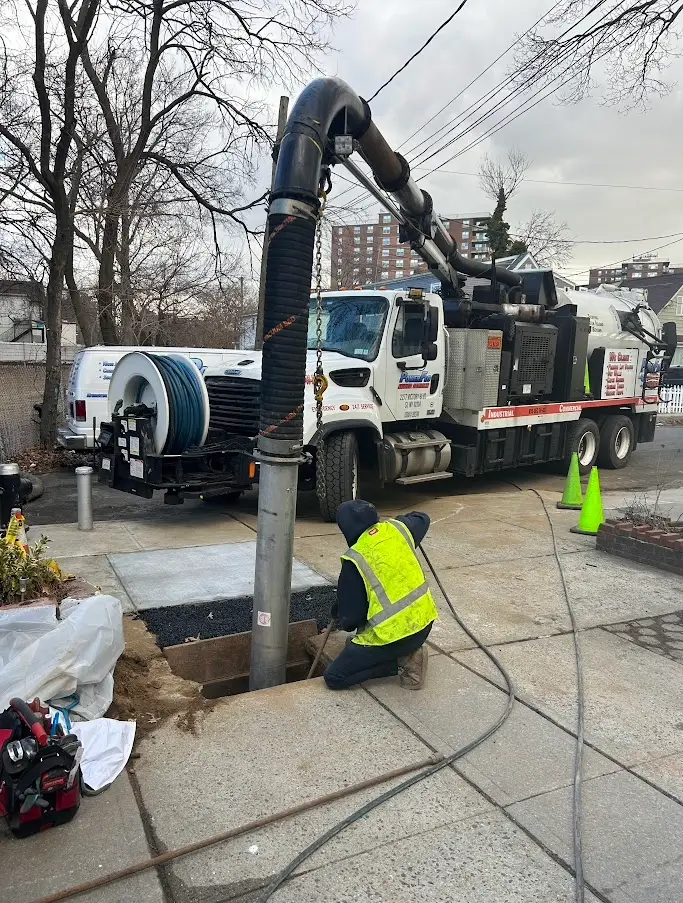
Hydro Excavation is the safest way to expose and clean buried or mud-filled drains.
Can clogged outdoor drains cause basement flooding?
Absolutely. When storm drains cannot move water away from your property, it can force water into:
- Basement drains
- Foundation drains
- Lower-level bathrooms
Outdoor drainage is a major part of NYC flood mitigation.
What is Hydro Excavation?
Hydro Excavation uses high-pressure water and a vacuum system to:
- Break up compacted soil
- Remove sediment
- Expose buried drains
- Clean out catch basins
- Safely access underground utilities
It is a critical tool for outdoor flood prevention and drain restoration.
COMMERCIAL & RESTAURANT FAQs
How often should a restaurant's grease trap be cleaned in NYC?
NYC guidelines recommend grease trap pumping every 30–90 days, depending on volume. Some high-output kitchens require monthly service.
Why do kitchen floor drains back up?
The common causes include:
- Grease buildup
- Food solids
- Soap sediment
- Clogged grease lines
- Overflowing grease traps
Hydro jetting is often required to fully restore flow.
Do you provide service documentation for New York City compliance?
Yes. PowerFlo provides maintenance logs and documentation upon request.
CAMERA INSPECTION FAQs
Do I need a camera inspection after a sewer backup?
Yes, because it identifies:
- The exact cause
- Pipe condition
- Root intrusion
- Cracks or collapse
- Recurring problem areas
Can a sewer camera locate the exact depth and location of a break?
Yes — modern locating equipment pinpoints both.
PREVENTION & MAINTENANCE FAQs
How can I prevent sewer backups?
PowerFlo recommends:
- Avoiding wipes
- Avoiding grease in drains
- Annual or semi-annual maintenance
- Regular jetting for older cast-iron pipes
- Outdoor drain cleaning and inspection
- Installing a backflow prevention system if your basement is below street level
Do you offer maintenance plans for buildings and restaurants?
Yes — we serve:
- Single-family homes
- Multi-family buildings
- Commercial properties
- Restaurants
- Schools and institutional facilities
LOCAL NYC RESOURCES & OFFICIAL INFORMATION
PowerFlo provides expert guidance, but sometimes customers need official city information regarding street drains, flooding reports, or compliance rules. Below are trusted NYC resources:
-
NYC Department of Environmental Protection (DEP)
Information about sewer mains, storm drains, and reporting street-side flooding.
-
NYC 311 — Report Street Sewer or Catch Basin Issues
Use this resource to report blocked street drains, storm grates, or city-owned sewer problems.
-
NYC Department of Health (DOH)
Restaurant grease trap requirements and food service regulations.
-
NYC Department of Buildings (DOB)
Information regarding code, backflow preventers, and building compliance.
-
FEMA Flood Zone Information
Check if your home or business lies in a flood-risk area.
Need Help? PowerFlo Is Here for You
If you’re dealing with a sewer, drain, or flooding issue, or just want expert guidance:
Call PowerFlo Sewer Service
Family Owned • Second Generation • 2,000+ 5-Star Reviews
Call Now